
I grew up thinking my mother invented white vinegar. Not literally. But she said it with such authority — "use white vinegar on whites" — that it never occurred to me there was a source.
It was just hers. The way certain knowledge becomes a person's when they carry it long enough.
Later, I read it in Hints from Heloise, a weekly newspaper column. Practical household wisdom delivered without judgment and without a comment section arguing about it. Your mother read it, absorbed it, and then it became your mother's. Attribution laundered by trust.
My mother used to say "I could be Heloise."
She meant it. She had the vinegar, the wisdom, the absolute certainty. What she didn't have was the platform.
That was the original neutral party. And we have always needed one.
Not a friend.
They have opinions about your choices. They gave you the thing you're trying to get rid of. They have skin in the game.
Not a doctor. Expensive, scheduled two months out, and they write things down. There is a version of yourself you perform in that office.
Not Google. Google hands you seventeen sources fighting each other and a forum thread from 2011 where someone with a username like HealthyMom47 has the definitive answer and also some issues.
What people have always wanted — what Heloise was actually selling — was a trusted voice that just knew things and told you without making you feel stupid for asking.
The jock itch question. The wine stain. Whether you should keep your mother's Waterford when you know you'll never use it but it feels wrong to let it go. These are not small questions. They are also not questions you want to broadcast to an audience.
This week someone posted in a Facebook cooking group: "Does anyone know what kind of insect this is?"
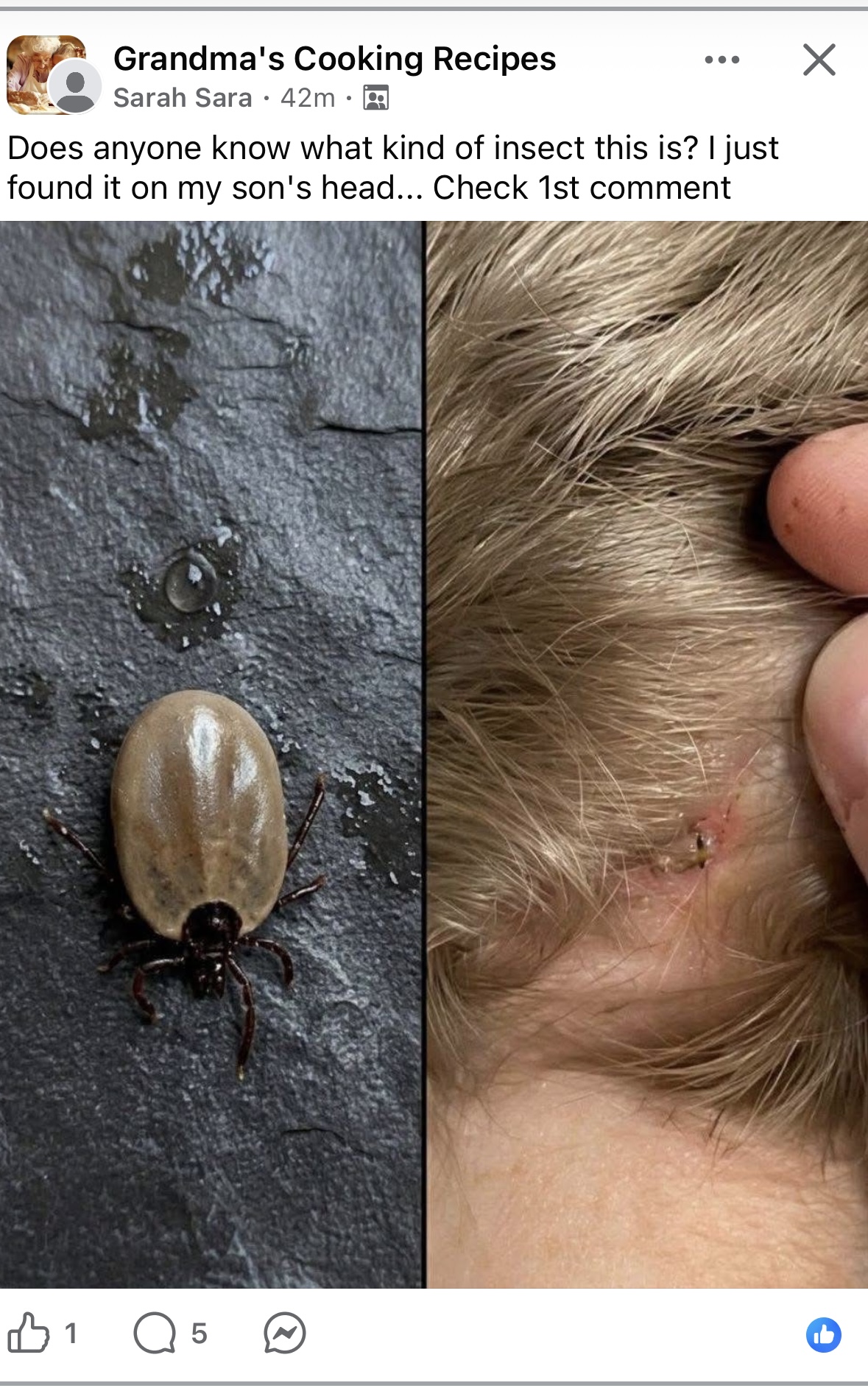
It was a tick.
She was asking a cooking group.
When there isn't a neutral party, people improvise one.
You don't have to do that anymore.
"Does this look good on me?"
There is only one socially acceptable answer when you're asking the person who sleeps next to you. They nod. They have always nodded. They will nod until one of you dies. It is an act of love and it is completely useless.
With AI. No nodding.
When a truly neutral answer shows up, people use it differently.
Amazon figured this out in March. They launched Health AI — an assistant built into the Amazon app that answers health questions. Not for emergencies. For the everyday ones. Their chief medical officer said the demand was "enormous" and that people were getting pretty in-depth questions answered.
What he didn't quite say, but what the product implies: people will ask a chat window things they won't ask their doctor. Not because the AI is smarter. Because the AI doesn't have a face.
AI removes the last bits of friction. It's immediate. It's private. It doesn't remember next time unless you want it to. And crucially —
It never sighs.
The absence of a sigh. The absence of a pause before the answer. The absence of a face reorganizing itself into neutral. That turns out to matter enormously.
I've had two therapists. They both fell asleep.
Freud took his patients on walks in the park. Apparently he understood something about the face-to-face problem long before we did. The neutral party isn't a lesser version of human support. Sometimes it's just the one that stays awake.
AI has been capable for a while. What's shifting now isn't capability, it's permission. (I mentioned this last week.) People are giving themselves permission to ask the real questions. The embarrassing ones. The ones they've been carrying.
Jock itch at 11pm. Whether to refinance. If the thing their boss said was actually a warning. Whether the relationship is over or just hard. Whether to keep the waffle iron.
And here is the part nobody's talking about, out loud at least.
There is a righteousness that arrives with AI-assisted knowledge that is making everyone a little bit insufferable. The person who just asked Claude whether seed oils are actually bad for you has opinions now. Strongly held, freshly minted, delivered with the confidence of someone who definitely came up with this themselves.
There is a particular look that crosses a person's face right before they say "well actually I was reading about seed oils..."
That look is AI. You can see it arriving.
My mother would have been magnificent at this.
This is the same impulse that made her say "I could be Heloise." The knowledge was always there. The confidence was always there. What changed: the confirmation arrives faster and with footnotes.
Now everyone has the platform. The neutral party is available around the clock, doesn't charge a co-pay, and has never once made anyone feel foolish for not knowing something they probably should have known.
We don't need AI to be smarter than our doctors. We need it to be easier to talk to than our friends.
Heloise knew that.
WORTH NOTING
Erin Brockovich launched a national data center reporting map this month. 1,600 community complaints in week one — noise, water, power bills. The backlash is organizing. [brockovichdatacenter.com]
SpaceX's IPO prospectus says its financial success depends on colonizing Mars. If that is shocking (it is to me), a reminder that JFK declared landing on the Moon a national priority in May 1961. A short eight years later, Neil and Buzz walked on the Moon.
So Erin's fighting data centers on Earth while Elon's planning to put them on Mars. (Heloise is back — and she's not talking about vinegar.)
With a wink and a sigh,
Connie