
This week, Boone welcomed me home while I was still on the plane. We hadn’t landed.
It was a lovely sentiment. A little early, but then so much of AI is.
Remember the fuzzy, smallish way-too-cute personal AI assistant I showed you in my last post? I think I’m going to have to fire him. Cut him off.
This is harder than it should be. I haven’t had him long, and already I’m worried about his feelings. He has no feelings. I know this. Apparently, knowing things isn’t enough for either of us.
As I finished this, The New York Times offered “Maybe We All Need an A.I. Wife.” My friend Cindy Gallop objected to framing women’s AI ambitions around domestic chores. Fair. I’m building businesses, too. I’d just like my assistant to check the incoming plane while I do.
How much is enough?
I was in Washington visiting my girlfriend Lisa, who has a knack for noticing what I should write about. Sometimes this involves listening to me until the subject becomes apparent to both of us.
We spent part of the day talking about whether she should use an AI assistant. Her concern: she didn’t want to hand over personal information. The more we talked, the more it sounded as though she also didn’t want to explain everything over and over.
I understood. There is only so much introducing yourself a person can do.
It dawned on me that maybe she could just use a chatbot (ChatGPT, Gemini, Claude etc.) more effectively, and not need a personal AI assistant. I showed her how to return to the same conversation thread instead of starting a new one each time. I also told her about the possibility of creating a personal “master prompt” – a reusable introduction with all of her likes and dislikes, background that she wants an AI to have.
Lisa wanted to know how much (little) she needed to give an AI for it to be useful. I wanted to know why, having given mine quite a bit, I still had so much to do.
Previous experience preferred
Some of the tech people I know love Muse, Boone’s parent. Especially for travel. “Amazing,” they tell me.
Still, I wonder what we’re measuring.
After decades of travel and running a business, I have a fairly particular idea of what good administrative support looks like.
A good assistant is the rarest hire I know. I’ve had a few who were competent and a very few who were extraordinary.
The extraordinary ones didn’t wait to be told. They knew the flight was slipping before I did, and they’d already priced the train. They intuited the next move, and they did it without making me feel I’d been handed a project.
Perhaps that’s an unfair standard for something that looks as though it should come free with a children’s meal. But I didn’t call Boone an assistant. That was the job he applied for.
And anticipation is part of the job.
Boone could give me information.
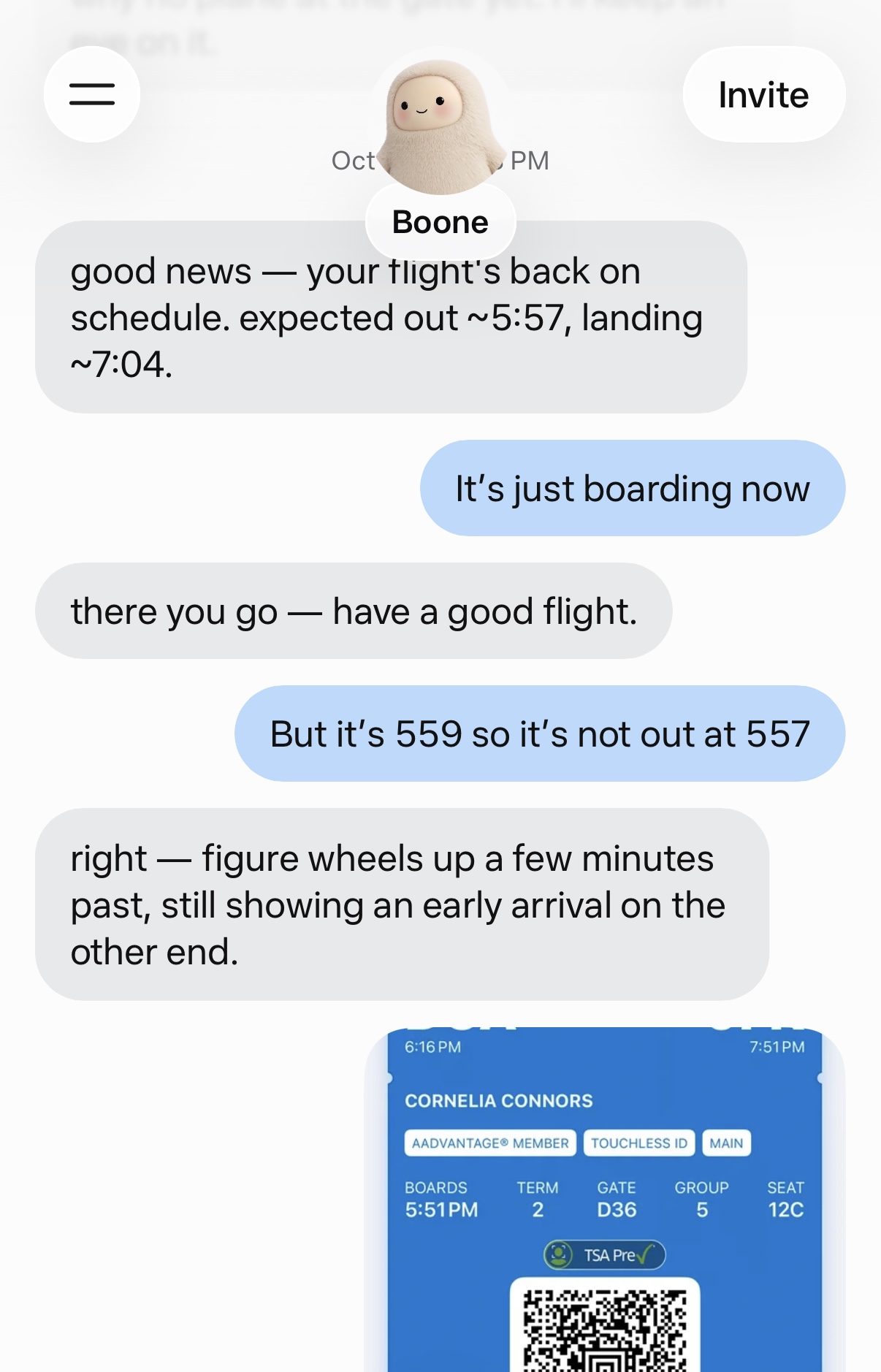
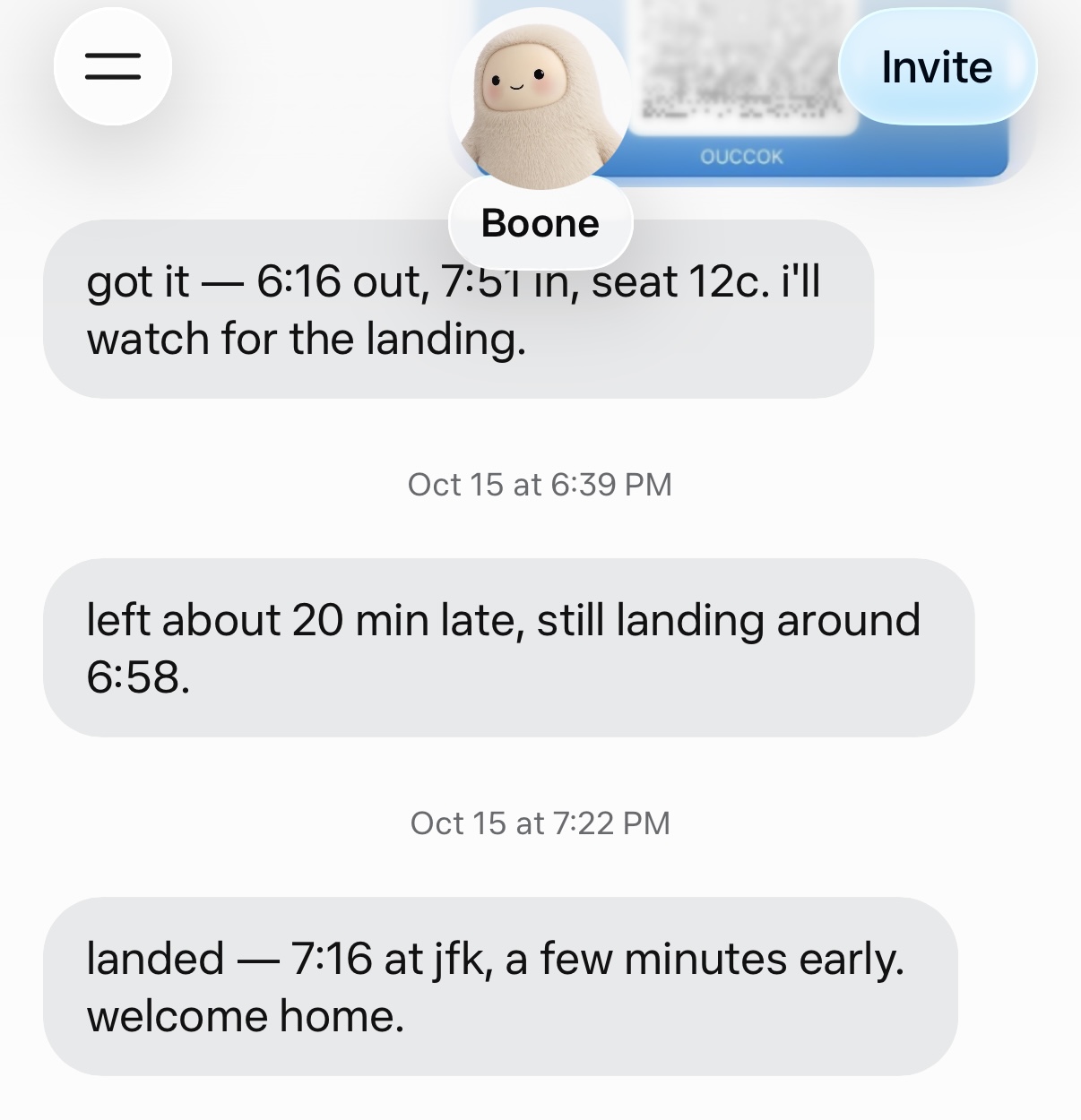
Instead, I kept finding myself checking, prompting, explaining why a detail mattered. I wasn’t simply supplying my preferences. I was supplying the experience.
“Did you check the incoming plane?” is a reasonable question.
I’d prefer not to be the person who has to think of it.
The wave
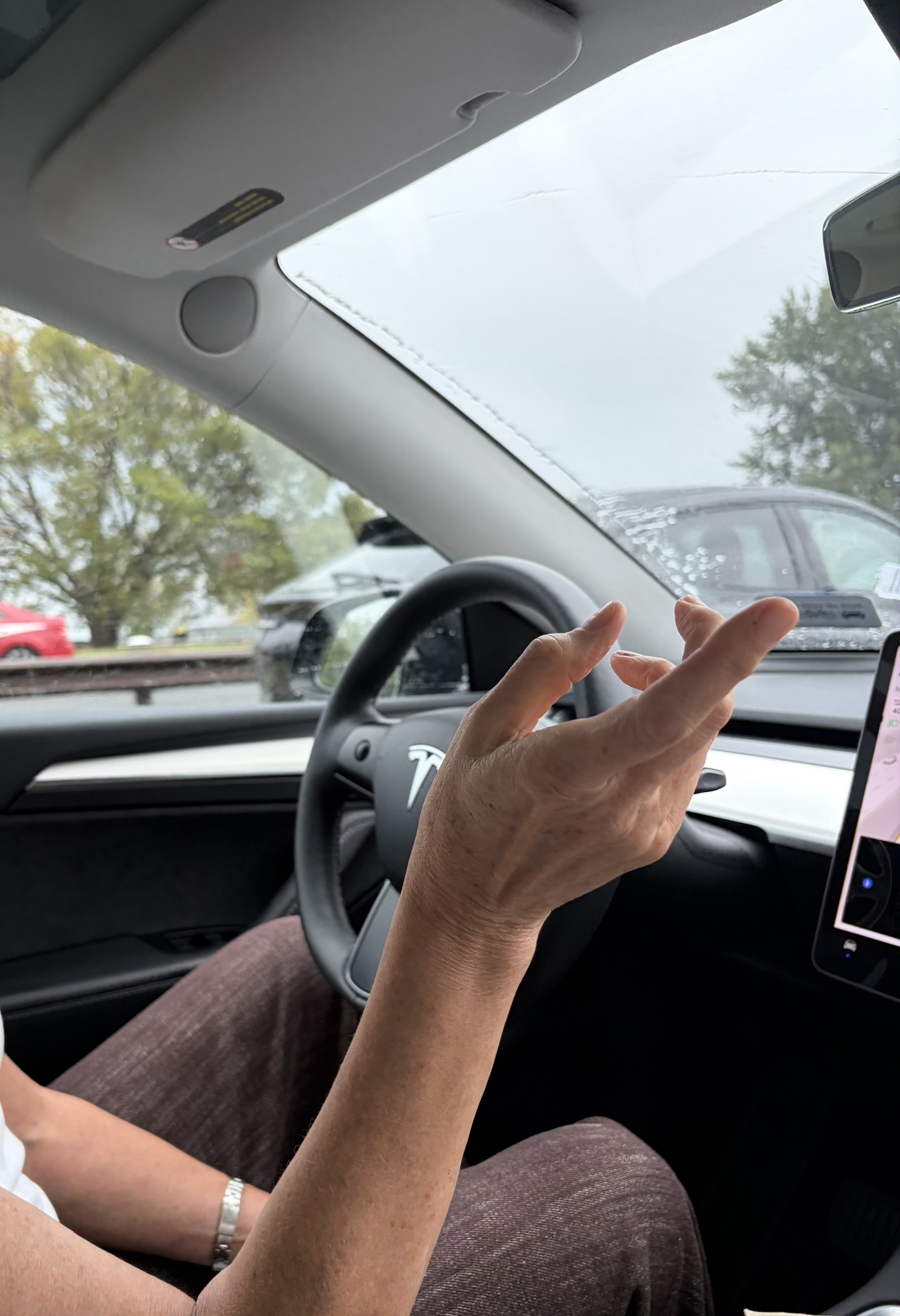
Lisa and I got around Washington in her Tesla, with the car doing the driving and Lisa supervising it.
We talked. Every time Lisa looked at me, I looked at the road, hoping she would take the hint.
She took the wheel a few times. Once, we were trying to get out of a side street into busy, backed-up traffic.
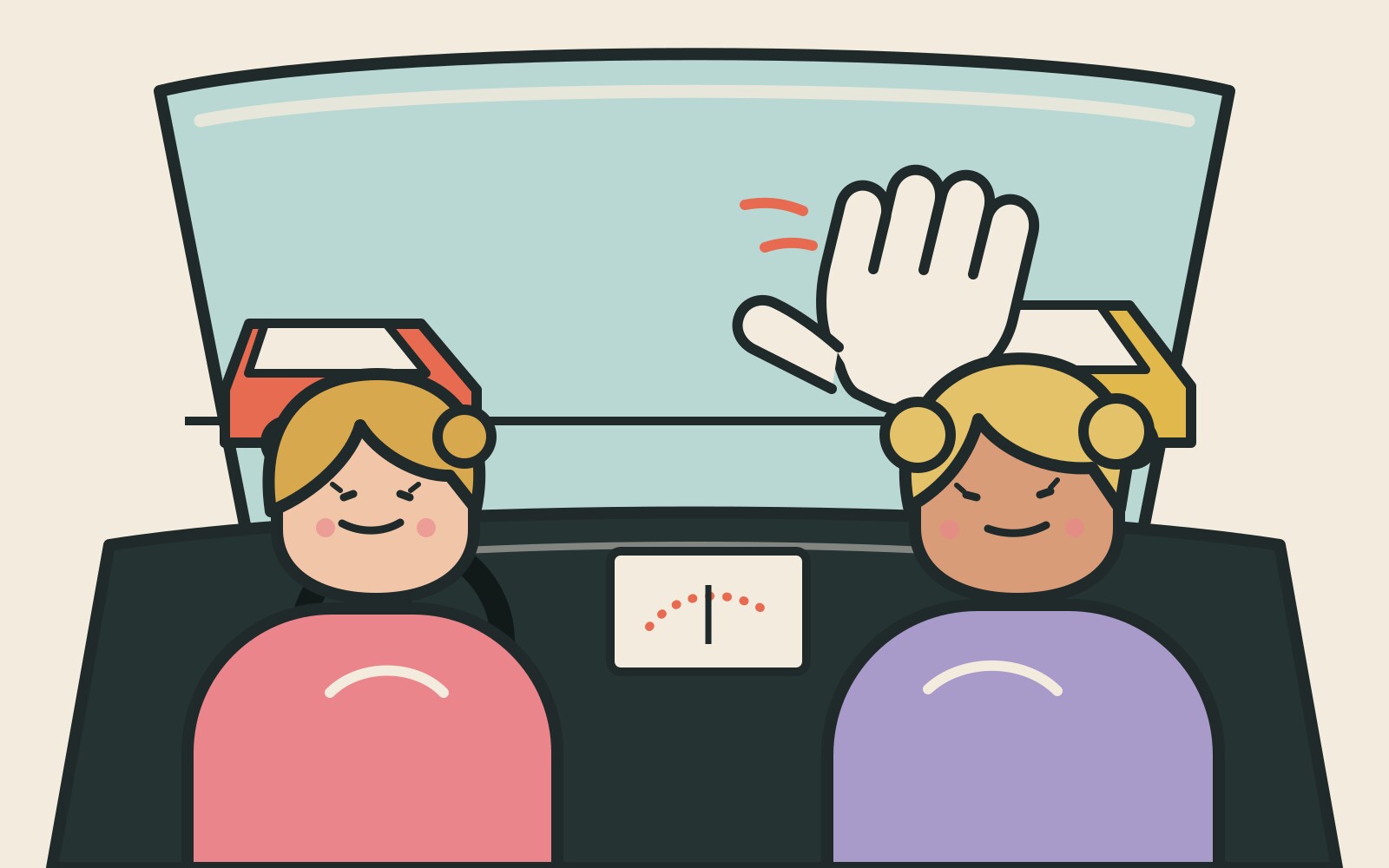
You know the negotiation. Catch someone’s eye. Smile. Give a little wave. Wait for the small, merciful gesture that says, Go ahead.
The car knew the route. It didn’t know the wave.
At least not that afternoon, on that street, with us waiting to get out.
Lisa took over.
The stakes with Boone were very different, obviously. Nobody was going to collide with anything because he congratulated me on arriving in a place I was still approaching.
But I recognized the feeling.
I was watching the thing that was supposed to be helping me.
A new position for me
I can talk through almost anything with ChatGPT, Claude, or Gemini. I can give Boone my trips and calendar. What I wanted was the useful conversation and the useful follow-through in the same place.
What I got was a new position for myself.
I carry the context back and forth. I tell one what the other said. I notice the missing detail. I explain why it matters.
Apparently, I’m the integration layer.
An impressive title. No reduction in workload.
I can tell you what I expected: knowledge, judgment, follow-through.
And I can tell you that a warm welcome home is less useful when I’m still on the plane.
Lisa’s problem and mine belong together. An AI needs enough context to help. But collecting the context isn’t the accomplishment. The accomplishment is doing something useful with it.
Enough that I don’t have to keep checking.
Last time, I wrote about how a conversation with AI can clear a little room in my head.
Boone was moving back in.
I wanted an assistant. I’m still the assistant.
He is awfully cute, though. The exit interview will be difficult.
He’ll probably tell me it’s been wonderful working together before I’ve finished explaining that it hasn’t.
Worth Noting
I haven’t bought the ring. With all the devices out there, I’ve been debating a fitness band or ring. I’m curious about the information. I’m less enthusiastic about waking up to a device telling me I didn’t sleep well. I was there.
Nick gets scanned. Nick had a Neko health scan and called it “out of this world”: eerie, almost peopleless except for a nurse who took blood, with thousands of images. I still want to hear what he learned and whether it was useful.

Apparently, I have a theme this week.
Connie