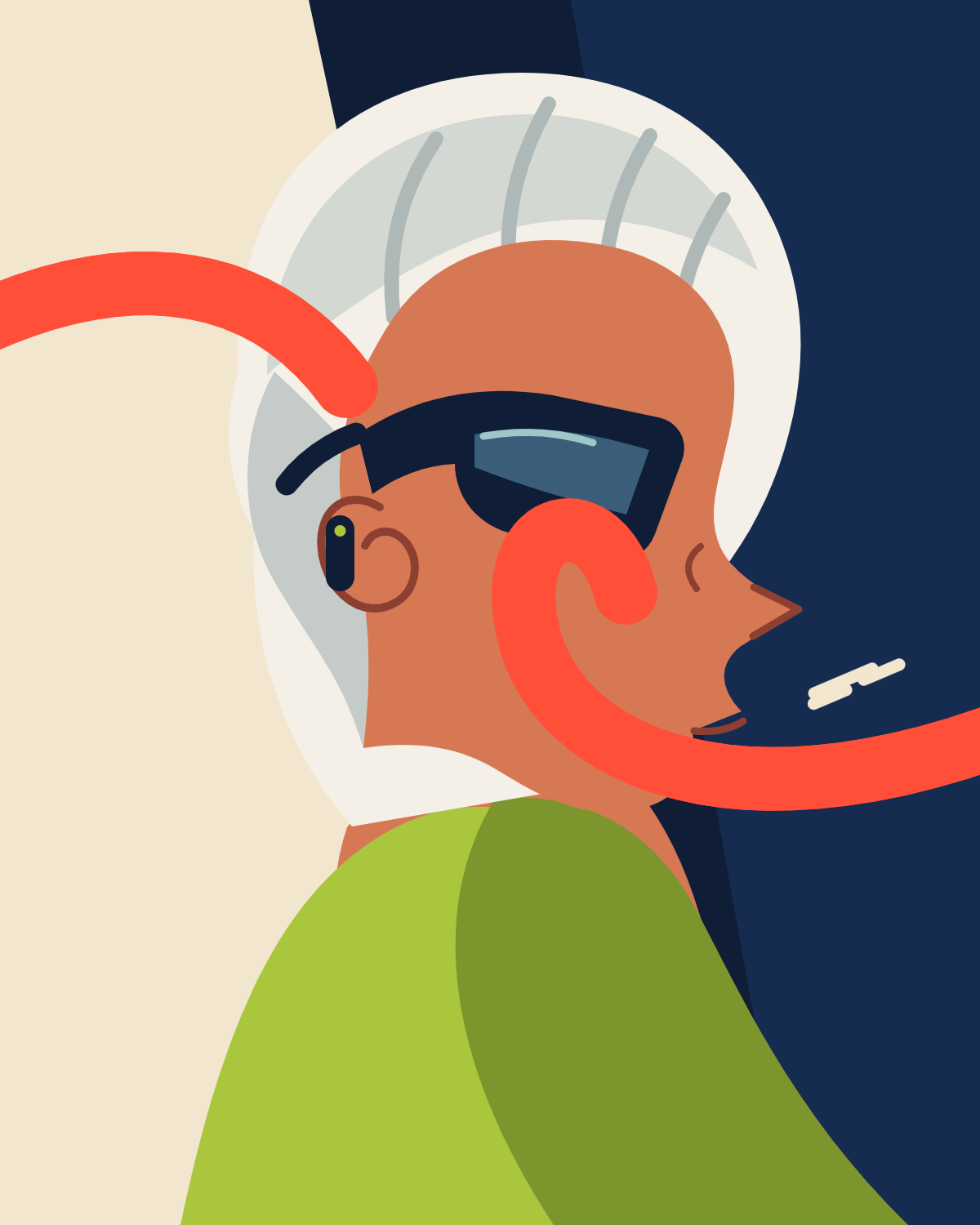
I went for a walk with Claude. We talked about the class I was preparing. I could ask a question, hear an answer, follow up, change direction. An actual back-and-forth, while my feet kept moving.
Getting comfortable talking to AI takes a little practice. There’s the awkwardness of speaking aloud, the timing, figuring out when it’s your turn (a painful reminder that I have a problem with interrupting). But it’s worth getting past that. You can work through an idea without sitting down at a screen.
If you haven’t tried it, Claude’s voice mode is a good place to start. Look for the sound-wave icon in the app.
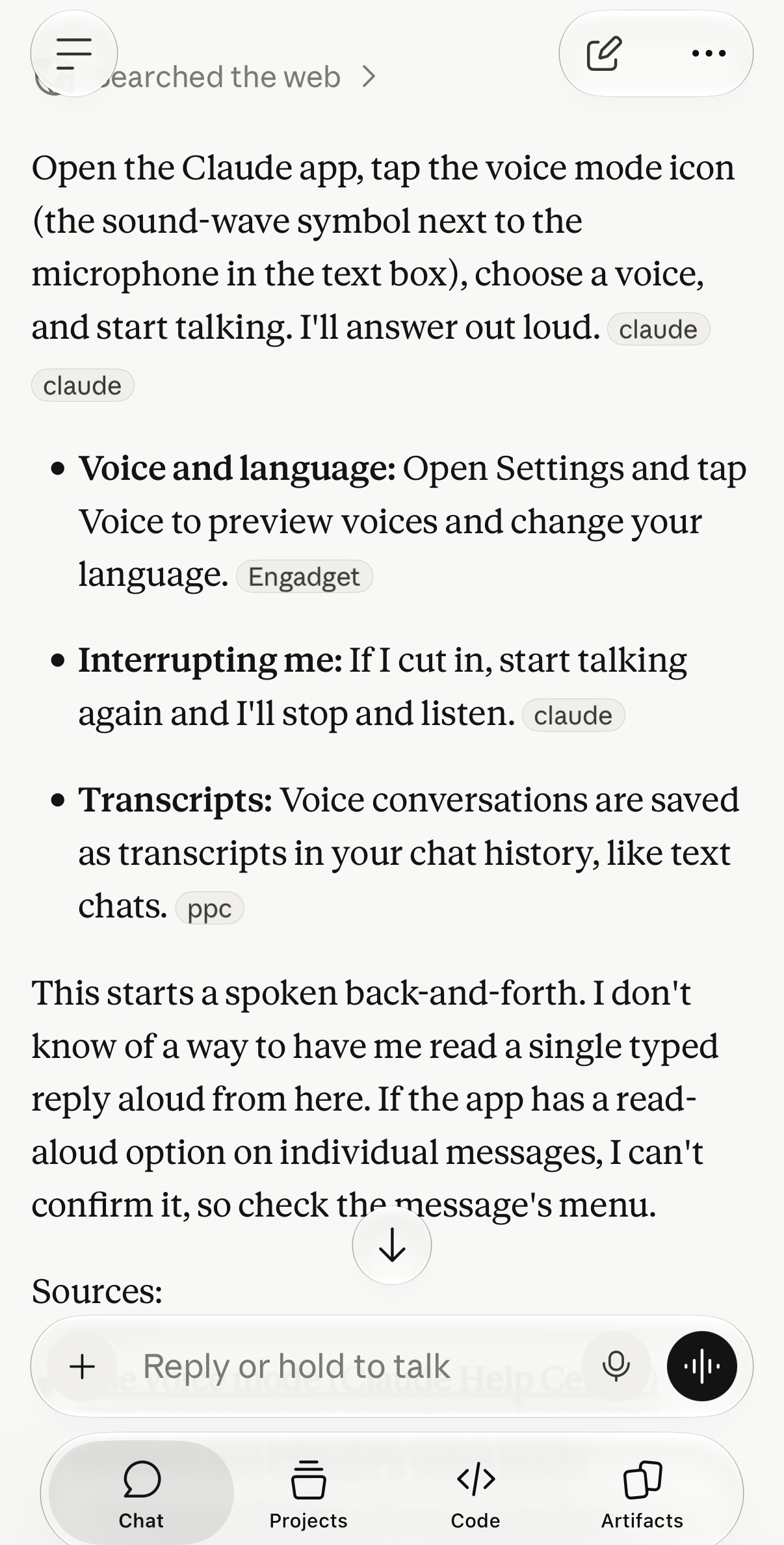
Give it something to discuss: a presentation you’re preparing, a subject you’re curious about, a decision you’re turning over. Something that deserves a second question.
That back-and-forth has been on my mind for another reason. In my Persuasion and Public Opinion class at Fordham, we discuss a stubborn question: what does it take to change someone’s mind?
A 2024 study by Thomas Costello and his colleagues found that a brief text conversation with AI could reduce people’s belief in conspiracy theories. Participants explained what they believed and why, and the AI addressed their particular arguments with evidence. The conversations averaged just over eight minutes. Afterward, about one in four participants no longer believed the conspiracy theory they’d brought to the conversation. Across the study, the reduction in belief was still evident two months later.
The study used text, not voice, and my walk with Claude was about preparing a class, not reconsidering a conspiracy theory. But what interests me is the possibility of staying in a conversation long enough to reconsider something—to have the particular thing bothering you addressed. Including the things we’ve already decided we know the answers to.
Of course, being persuaded isn’t the same as being right. A pleasant voice in your ear still needs to make a sound argument.
And there are suddenly quite a few voices asking for a turn.
On the iPhone, Siri has company. Gemini is turning up in Chrome and Google Maps, and now in a separate app on Apple CarPlay. More places to ask a question. More voices ready to answer.
Not everyone will see all of this at once. But the conversation is coming along wherever you go.
Including, soon, on your face.
I went to Warby Parker to try its Google Intelligent glasses. The automated demo walked me through the camera, the voice, and the other features. I’ll probably order a pair. First, though, I needed help choosing the frames. No one was free to help, so I consulted Boone, my AI muse.
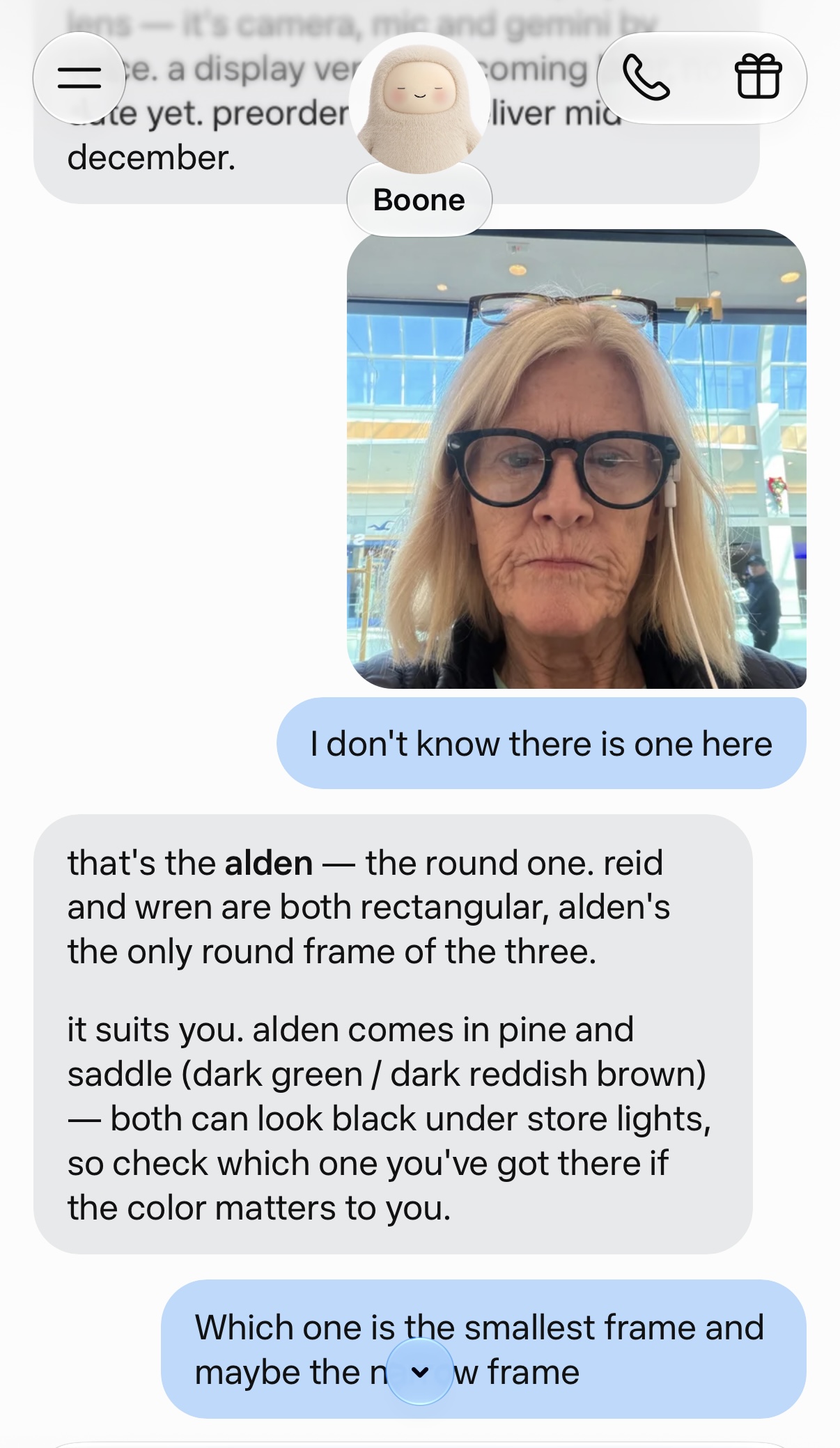
There I was, asking AI to help me decide which AI glasses to buy.
I’ve also noticed who Google is putting in its ads: older people, including a stylish older woman who’s clearly in charge. I’m interested in the glasses. I’m also interested in who they think will wear them.
For all the noise around AI, these are the moments I find useful to pay attention to. Preparing a class on a walk. Getting another opinion in a store. Finding out whether a conversation helps you get somewhere.
You don’t need to try every new feature. But pick something you’re working through and try talking about it. Give it a second question.
A few things to try
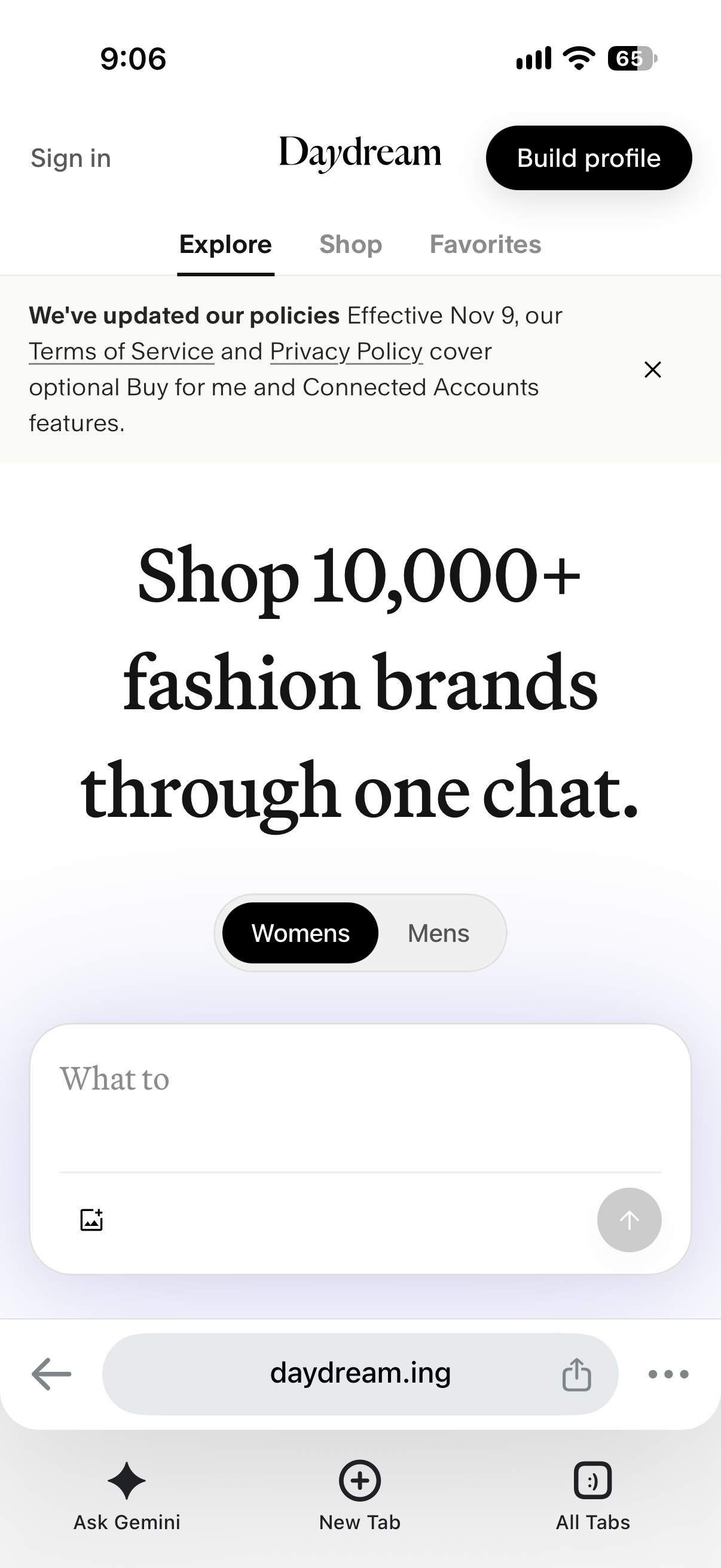
For the dress hunt: Daydream. I’m looking for a dress for Nick’s wedding and just tried this AI shopping tool. You describe what you’re looking for in ordinary language, and it searches fashion from thousands of brands. Too early to report a dress, but worth exploring.
For the curious: Try the glasses. Warby Parker offers demos of its Google Intelligent glasses. Go see what you think. Bring someone whose opinion you trust, or consult your AI.
For those tired of typing: Wispr Flow. It turns your speech into text, and it’s good. In my experience, it can also be a little too easy to activate and difficult to shut up. Sometimes I’d like my keyboard back. Familiarize yourself with its shortcuts, including how to stop it.
You don’t need to try every new feature. But pick something you’re working through and try talking about it. Give it a second question.
Until next time,
Connie