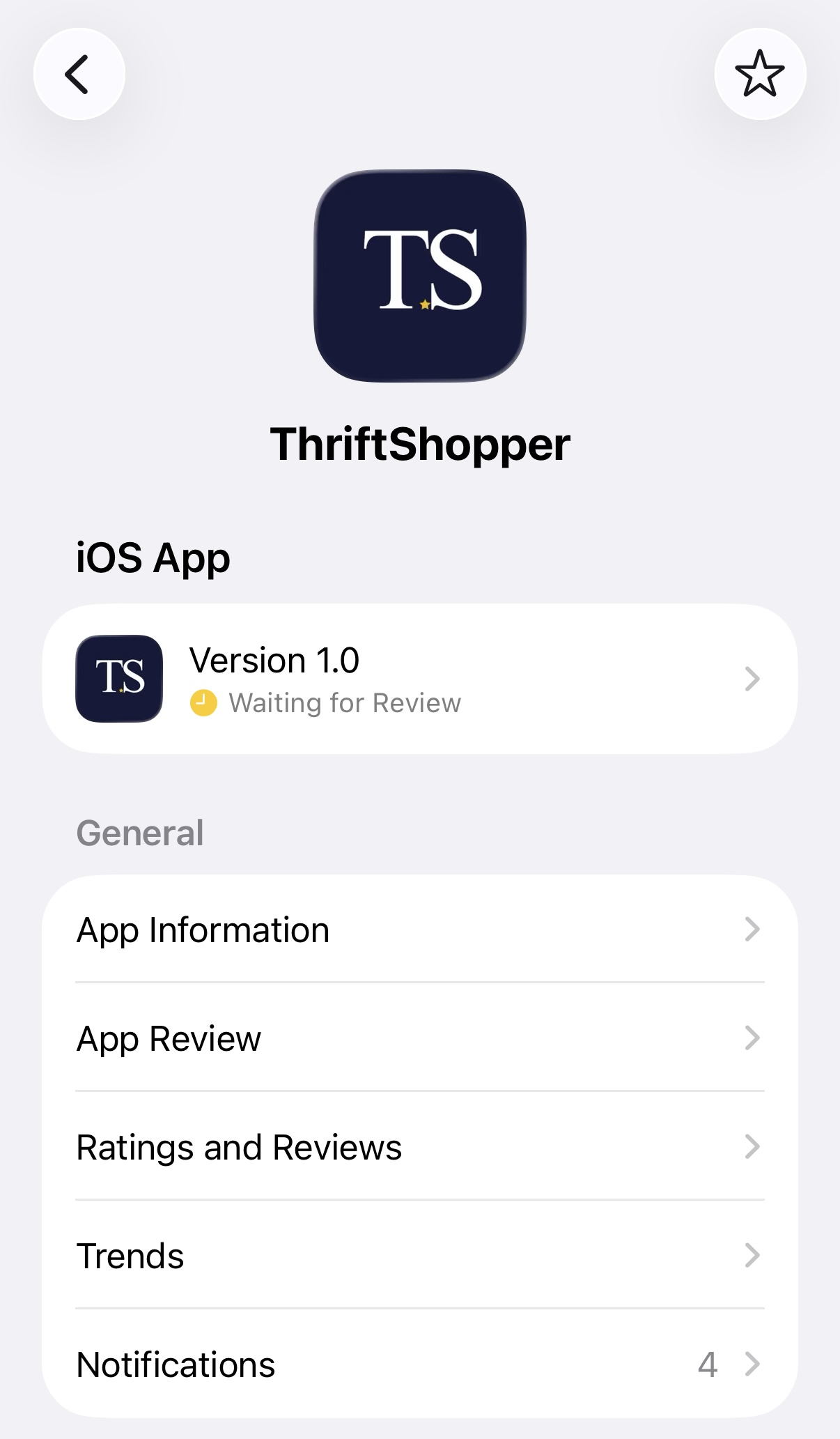
Seventy-one hours ago I pressed submit to Apple, closed the laptop, and entered a waiting room with no chairs, no receptionist, and no estimated wait time.
Somewhere in a queue, my new app sits. A human will look at it when a human looks at it.
Here is what I have learned in seventy-one hours: the most sophisticated technology distribution system in the history of consumer products runs on people.
In February I stayed in Ballycotton, a coastal village outside Cork, where Apple employs 2,500 people. On one stretch of oceanfront sits what locals call an “Apple house”: a glassy, multi-million dollar home beside a centuries-old stone shanty.
The contrast isn't subtle. Neither is what it represents: the person who lives there decides whether your app is ready for the world.

Recent reports suggest Apple has been giving its reviewers more protected time off on weekends. I think that's admirable. I also think it explains my weekend.
I do not begrudge them the house or the weekend. But I want to note, for the record, that the waiting is not a glitch. The humans were always in there. We just forgot to look for them.
The algorithm remembered the date. It did not notice the story.
Last week Facebook reminded me — driven purely by the calendar — that fourteen years ago I made cupcakes for my son's prom. Working mom here. Not store-bought. Fondant. App icons, hand-piped, one by one: Facebook, Instagram, the little Notes app. The ones that felt like the future in 2012.
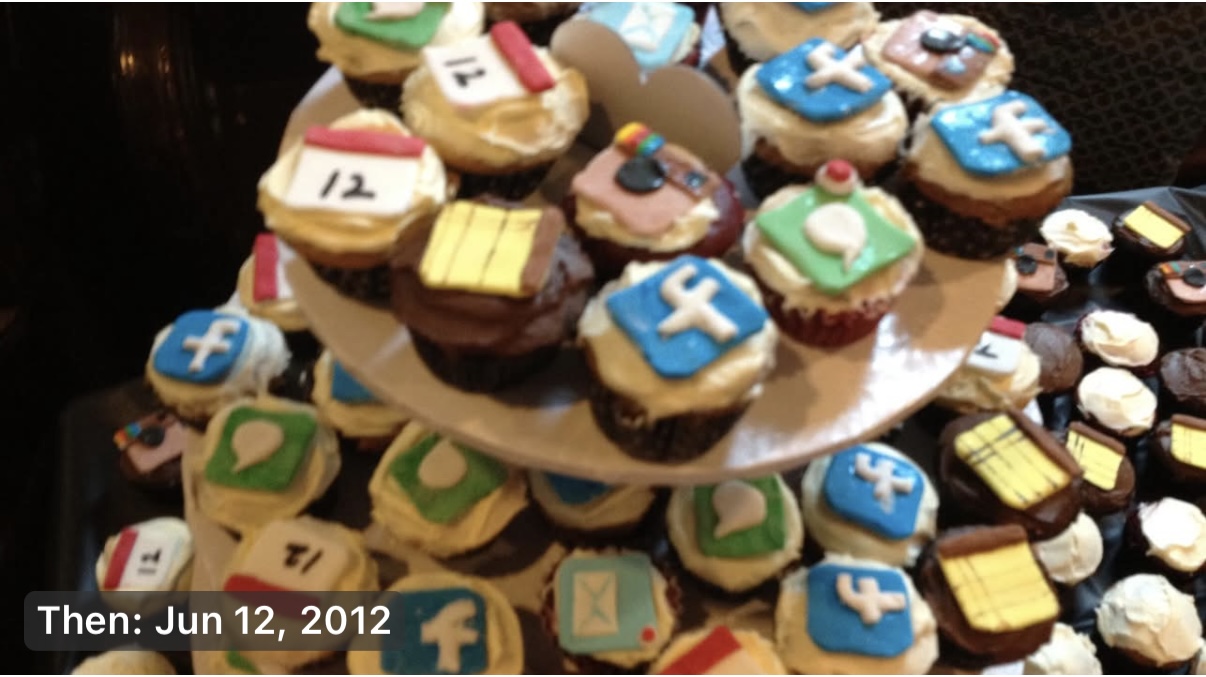
Facebook did not know that the woman who made those toppers has spent the last year building her own app — that she has one in the App Store and a second one waiting for a stranger in Cork to open it. The algorithm remembered the date. It did not notice the story. That difference may be the subject of this decade.
Human and precision
Last week I became a hand model. I do model on occasion — it turns out “old ladies” are in high demand — but what made this particular job interesting was what happened before I even arrived on set.
The director could have used AI-generated hands. She didn't. She asked for a human, and a specific manicure: light pink, frosted, pearlescent, rounded. She held up her phone and said this. I had no idea what color this was. So I asked ChatGPT. It identified the shade — OPI's Kyoto Pearl — with more certainty than the manicurist and faster than the Sherwin-Williams app.
I used AI exactly where it helped. The director withheld it exactly where human presence mattered. That is what good judgment looks like — not a policy, just a call, made by a person, in the room.
Honey, just listen to her.
Siri made headlines this week. Big promises. Wide rollout. And here is what I keep thinking about:
It only takes one right answer before you stop asking.
We know this from GPS. There was a moment, for each of us, when we thought I don't think this is right — and then we followed the directions anyway — and then we arrived. And something shifted. We never quite argued with her again. Honey, just listen to her. The surrender wasn't a decision. It was a habit that formed in the space where a correct answer used to feel like a coincidence.
Now Siri, newly empowered with Gemini, lives on more than 500 million iPhones. One update, one hundred million people who already said yes.
A new report this week says half of Americans now believe AI-free financial advice will soon feel outdated. Half. We are pre-approving things we haven't fully seen yet, granting access before the relationship has been tested, handing over the keys because the car looks new.
Medical advice is next. We are close. I don't say this to frighten anyone. I say it because the question isn't whether AI belongs in the room. It's who decides when it gets to come in.
There is a line from Pretty Woman I think about more than I probably should: I say who. I say when. I say how much.
We should say it more.
The permission to do nothing
The food pantry where I volunteer is having this exact conversation right now. For years, tech stayed at the door. The work was human by design — eye contact, a bag of groceries, the small dignity of being seen. Something is shifting. Questions are being asked. I find that I want them to take their time. Not because technology doesn't belong there. But because the people who built that trust deserve to be the ones who decide when it evolves.
On Flag Day, my neighbor hung an upside-down flag and looked at me: I know this probably pisses you off. It didn't, particularly. But I didn't know what to do with the moment, so I did what I do: I asked ChatGPT. It told me, gently, to let it go. By noon she had taken it down. No one engaged.
Sometimes the wisest thing the machine can give you is confirmation of your own restraint.
My app GoShed exists for exactly this logic. It helps people decide what to let go of — possessions, mostly. But the principle travels.
I went to hot yoga this morning. I jokingly say I hate yoga. I do. But I go because it's hard — and because it conditions me to walk through anything difficult. If you can learn to move through that particular pain, you can move through almost anything.
Except waiting for Apple.
Connie
P.S. The new app is ThriftShopper, a companion to GoShed. The third in the trilogy will be MemexMe, for you to record and share your stories before they become someone else's estate sale. If you haven't downloaded GoShed yet, I'd be grateful if you did. It helps this old lady get taken seriously. Thank you.