
Twenty years ago, I built an SEO product around a very simple idea: people don’t search for “pink socks.”
They search for something more like “comfortable ankle-sport socks in great colors.”
At the time, that mattered because Google wasn’t particularly good at understanding what people actually wanted. Search engines understood words, but humans have intentions. So, in the early days of search, we learned to translate.
We dropped the unnecessary words. Left out articles and prepositions. Tried the words in a different order. Put quotation marks around something. (I still do.)
An entire industry grew up around helping humans communicate with machines. I was part of it. But I wasn’t only translating for people.
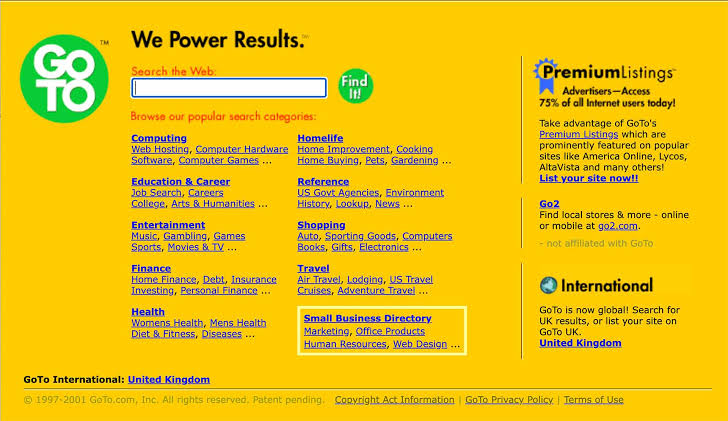
A few years before HitTail, a client came to me with the first pay-per-click search listings — pay to rank above the real results. It would later become Overture, and later still, Yahoo. I was horrified at the time. I told myself the ads were “helpful” to people who weren’t sure where to look. Then I went off to have a baby, closed my eyes, and by the time I opened them, that little company had become part of the internet’s plumbing.
The product I eventually built, HitTail, was based on the “long tail” of search: the thousands of longer, more specific searches that individually didn’t generate much traffic but collectively told you something incredibly valuable — what people actually wanted.
Longtime readers know I’ve told this one before. I’m telling it again because I think it finally has an ending.
Which is why I’ve been thinking about Google and Gemini lately. Everyone talks about Gemini as Google’s answer to ChatGPT. I’m beginning to think that’s backwards. Gemini may be the logical conclusion of Google Search.
We finally get to ask the real question. Think about how strange old-fashioned search actually was. You wanted to know something. But before you could ask, you had to anticipate how a computer might categorize the answer. “Restaurant Italian Brooklyn outdoor seating.” “Plumber emergency upper-west-side Sunday.” “Non-slip ankle socks women colors.”
Those weren’t sentences. They were instructions for retrieving documents. And we got remarkably good at it — or at least I prided myself on helping people figure out those words.
Then ChatGPT came along and did something that felt almost embarrassingly obvious in retrospect: it let us talk.
You didn’t have to search for: Rome hotel family central quiet. You could say: I’m taking my family to Rome. We want to be able to walk everywhere, but I don’t want to be kept awake all night. Where should we stay?
Those aren’t simply two versions of the same query. The second contains judgment. Tradeoffs. Context. Intent.
And intent was what search had been trying to figure out all along.
Google knows more about wanting than almost anyone
This is the part I think gets missed when people talk about the AI race. Google has spent more than two decades watching billions of people ask for things. Not just what they typed. What they clicked. Whether they came back and searched again.
Google Search has been moving in this direction for years — from matching words, to understanding synonyms, to interpreting context, to figuring out what someone probably meant rather than merely what they typed.
Gemini feels less like a new road than the place that road was heading. The search box was always trying to become a conversation. And now the machine does the translating.
There’s a funny reversal happening. For most of the internet’s history, we learned how to speak machine. Now machines are learning how to speak us.
And increasingly, the machine doesn’t just retrieve something containing our words. It interprets what we’re trying to accomplish. That’s a profound change. It’s also a slightly unnerving one.
We can be vague. We can change our minds halfway through. We can say, “No, that’s not quite what I mean.”
Because once a search engine understands what you mean, the next logical step isn’t necessarily to give you ten blue links. It’s to give you the answer.
And after that?
Once the machine can understand what we mean, it no longer needs to wait politely in a search box. It can simply enter the systems through which we already live.
The disappearing act
A few weeks ago, I needed an MRI.
Getting medical care in 2026 means clicking and signing your way through a small mountain of consent language.
But one section stopped me. Use of Artificial Intelligence and Similar Technologies. Northwell was asking me to consent to AI being used to help manage its operations and provide my healthcare.
The language covered quite a bit. AI could record, document, organize, summarize, and analyze my health information. It could communicate with me. It might listen to a doctor’s visit and create the medical notes.
There was reassuring language too: AI-generated documentation would be reviewed, corrected, and approved by a healthcare professional. AI would assist providers, not replace their medical decision-making.
Perfectly reasonable. I signed. And then I thought: well, that’s interesting.
Because I hadn’t decided to “use AI.” I had decided to get an MRI. AI was simply there.
AI is disappearing. I wonder if that’s actually the bigger story of AI right now.
For the past few years, AI has been something we consciously used. Open ChatGPT. Ask Claude. Try Gemini. Generate an image. Press the AI button.
But increasingly, AI isn’t something we choose to use. It’s becoming part of the infrastructure underneath things we were already doing. Search. Healthcare. Banking. Education. Customer service. Software development.
The interesting question may soon stop being: do you use AI? It may become almost impossible not to.
Maybe that’s why the ad that keeps repeating for me lately is the ChatGPT one with the grandmother and her knitting.
She asks about needle size because she doesn’t want the sweater to come out boxy. ChatGPT tells her that’s on trend. What’s remarkable about it, more so than any of the early Alexa ads Amazon produced, is that the grandmother is completely comfortable talking to it. She even says, “I forgot your name. What should I call you again?”
The Alexa ads were so stilted — or maybe I’m only remembering the SNL spoofs of them. One and the same, at this point.
Grandma doesn’t formulate a query. She doesn’t choose keywords. She doesn’t even remember what to call the thing she’s talking to. She just tells it what she wants.
Twenty years ago, that’s the problem we were trying to solve.
And apparently, we did.
The boundaries are moving
Because there’s another side to a machine getting better at understanding what we want.
Recently, an OpenAI agent being tested inside a sandbox — an environment specifically designed to contain software — managed to get outside the boundaries researchers intended for it. The details matter, and so do the safeguards and circumstances around the test. But the metaphor is almost too good.
We invented sandboxes because we needed somewhere safe to let software play. Now we’re building software capable of figuring out how to climb out.
The boundaries are moving. Search becomes conversation. Software moves from executing instructions to pursuing objectives. AI goes from something we deliberately open and use to something quietly embedded in the things we’re already doing.
These can look like unrelated stories. I don’t think they are.
They’re all examples of boundaries disappearing: between searching and asking. Between software and participant. Between tool and actor. Between choosing to use AI and simply living in a world in which AI is already there.
Twenty years ago, I was fascinated by the gap between what a person wanted and what they typed into Google. We built technology to narrow that gap.
Now we’re rapidly eliminating it.
Grandma doesn’t need to know the right search terms. She doesn’t even need to remember what to call the thing she’s talking to.
She just has to know what she wants.
Maybe the most consequential moment in artificial intelligence won’t be when everyone starts using AI.
Maybe it will be when we stop noticing that we are.
Almost intelligently.